
 UK
UK




 UK
UK
Managed Extended Detection and Response

Crafting Detections
Three-quarters (77%) of security pros believe that detection and response is becoming more difficult.

Attack Surface Sprawl
Half (46%) of IT decision-makers believe that their environment are more complex than they were two years ago.

Siloed Solutions
Top reason (47%) why security pros believe they're limited in detection and response is due to disconnected security tools.
Receive a Free Demo
What is XDR?
Extended Detection and Response (XDR) unifies and correlates threat data from endpoints, networks, cloud, and email into a single platform.
It provides centralised visibility and advanced analytics, enabling fast and orchestrated threat detection, investigation and automated response.
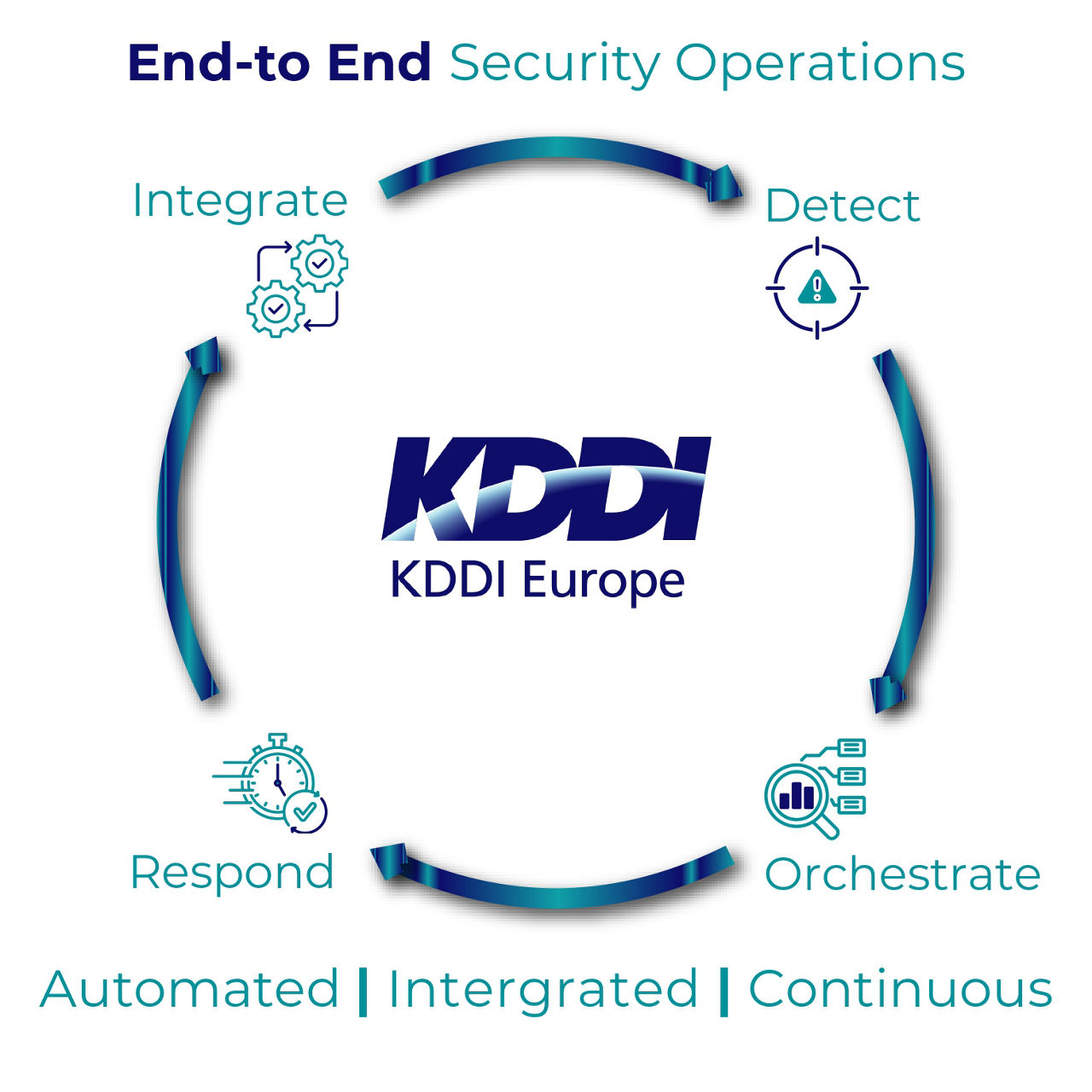
Hunting & Alerts
Data Ingest
XDR Detections
Investigation
Response
Why Choose XDR?
XDR empowers your team with cross-domain detections, enabling faster, accurate threat identification and investigation.
With its unified console, XDR consolidates threat data across your security ecosystem, delivering high-fidelity telemetry and blazing search speeds.
XDR offers purpose-built integrations with multiple 3rd party systems to extend its capabilities, ensuring seamless compatibilities with best-of-breed security tools.
Schedule a DemoXDR is ideal - But How Do We Manage it?
Cyber attackers don’t wait. In just 2 minutes and 7 seconds, they can breach your system. Managing cybersecurity requires expertise, relentless vigilance, and a 24/7-ready environment – something attackers count on you lacking.
That's where we step in.
With our Managed XDR (MXDR) service, we take the burden off your shoulders. From constant monitoring to proactive defence, we safeguard your organisation round the clock – so you don’t have to.
Why Choose KDDI?
As a world-renowned one-stop solution provider and cybersecurity firm, KDDI are dedicated to tackling cyber threats with cutting-edge technology, expert strategies, and round-the-clock protection. With us, we ensure cyber attackers never stand a chance.

KDDI Europe, the European arm of KDDI Corporation - a Fortune Global 500 telecom leader with over five decades of expertise - provides one-stop ICT solutions to 1,500+ global clients.
We specialise in Network, Data Centre, IoT, RPA, and Security services, empowering industries like retail, finance, and education with seamless global operations.
With 60,000 employees across 100+ offices worldwide, KDDI combines unmatched reach and innovation to deliver reliable, future-ready connectivity solutions.
Key Terms Explained
We understand that the wide-array of services and options available can prove overwhelming - to help, we’ve outlined a few of the most commonly used terms below!
Endpoint security focuses on protecting endpoints (e.g., laptops, servers) using antivirus, EDR, or other endpoint-focused tools. While effective, it lacks visibility across multiple layers like network or cloud and doesn't provide centralised management or advanced threat hunting.
EDR focuses only on endpoints like PCs and servers.
XDR goes further by combining data from endpoints, networks, cloud services, and other security layers, providing better visibility into complex and multi-stage attacks.
MDR provides 24/7 monitoring, proactive threat hunting, and rapid incident response. MDR specialises in detecting and responding to advanced threats but often focuses primarily on endpoints and may lack broader ecosystem integration or automation capabilities.
XDR is a technology platform that centralises detection and response across domains.
MDR (Managed Detection and Response) is a service where security experts monitor and respond to threats on your behalf.
MXDR combines both—advanced XDR technology plus expert-led, managed security operations.
Collects and analyses logs across the IT environment, offering compliance reporting and anomaly detection through data correlation. SIEM excels at centralising and analysing security data but typically requires significant manual effort to detect and respond to threats, making it resource-intensive.
SIEM mainly collects and stores security logs and alerts, often requiring skilled teams to interpret them.
MXDR not only detects threats across multiple layers but also investigates and responds automatically, supported by security experts—making it faster and more actionable.
XDR is better for organisations that need fast detection and response across endpoints, network, and cloud.
SIEM is useful for compliance and log management but often lacks built-in response and automation. Many organisations move from SIEM-only approaches to XDR or MXDR for stronger security outcomes.
XDR focuses on detecting and analysing threats using correlated security data. SOAR focuses on automating response workflows.
In KDDI Europe's MXDR, automation and orchestration are built in, allowing faster and more consistent incident response without complex manual setup.
• EDR: Detects threats on endpoints only
• XDR: Detects and correlates threats across multiple security layers
• MDR: A managed service where experts monitor and respond to threats on endpoints only.
• MXDR: Combines XDR technology with 24/7 expert-led detection and response across multiple security layers.
XDR solutions are used to:
• Detect advanced and multi-stage cyberattacks
• Reduce alert noise and false positives
• Speed up investigation and response
• Improve overall security visibility and control
Yes. XDR—and especially MXDR—is designed to reduce operational burden through automation and expert support, making it ideal for organisations with limited internal security resources.
MXDR includes end-user support during incidents, seamless system integration, and scalable architecture. This helps minimise business disruption while maintaining strong security as the organisation grows.
Yes. MXDR is built to scale with increasing data volumes, new systems, cloud adoption, and evolving threat landscapes, ensuring long-term security without major redesigns.