




SOC stands for Security Operations Centre. A Security Operations Centre (SOC) is a centralised unit that deals with security issues on an organisational and technical level. SOCs play a crucial role in modern cyber security by providing continuous monitoring, detection, and response to security threats. They are essential for protecting sensitive data and maintaining the integrity of IT systems. The main benefits of having a SOC include improved threat detection, faster incident response, and enhanced compliance with regulatory requirements, all of which help organisations stay secure in an ever-evolving digital landscape.

 UK
UK
UK
UK
Knowledge Why a Security Operations Centre Matters: Key Benefits for Detection, Response, and Compliance

Table of Contents
- Knowledge Why a Security Operations Centre Matters: Key Benefits for Detection, Response, and Compliance
- 1. What is a Security Operation Centre?
- 2. Why a SOC Matters for Modern Businesses
- 3. Key Benefits of a Security Operations Centre
- 4. Common SOC Use Cases
- 5. Key Roles and Daily Operations in a Security Operations Centre (SOC)
- 6. Conclusion
1. What is a Security Operation Centre?
A Security Operations Centre (SOC) serves as a centralised hub for an organisation's cyber security efforts. It brings together skilled professionals, established processes, and advanced technology to monitor, detect, and respond to security threats. By coordinating these elements, the SOC strengthens the organisation's ability to protect its digital assets and maintain a robust security posture.
Related article:
2. Why a SOC Matters for Modern Businesses
In today's rapidly evolving digital environment, the importance of a Security Operations Centre (SOC) cannot be overstated. Modern businesses face a growing threat landscape with increasingly complex cyber attacks targeting their operations. This necessitates the need for faster detection and coordinated response to minimise potential damage and ensure business continuity. Additionally, maintaining visibility across systems and assets is crucial for identifying vulnerabilities and preventing breaches. Ultimately, SOCs empower organisations to adopt proactive security strategies rather than simply reacting to incidents, making them essential for safeguarding business interests in the modern era.
3. Key Benefits of a Security Operations Centre
1. Improved Threat Detection
Having a Security Operations Centre (SOC) significantly enhances an organisation's ability to identify and respond to potential threats. With continuous monitoring, the SOC team keeps a constant watch over networks, endpoints, and logs, allowing them to spot suspicious activities as soon as they occur. This proactive approach enables early identification of threats and detection of anomalies, reducing the risk of security incidents escalating into major breaches. By leveraging advanced tools and skilled analysts, the SOC ensures that threats are detected quickly and efficiently across the entire digital environment. In addition, the SOC provides centralised visibility, which helps correlate data from multiple sources to gain a comprehensive understanding of security events. The team can quickly investigate alerts, prioritise incidents based on risk, and coordinate response actions to minimise damage. Regular reporting and threat intelligence sharing further strengthen the organisation's security posture, ensuring that emerging threats are addressed promptly. Ultimately, a SOC not only improves real-time threat detection and response but also supports compliance requirements and fosters a culture of security awareness within the organisation.
2. Faster Incident Response
Faster incident response is crucial for any organisation aiming to minimise the impact of unexpected problems. By enabling quicker triage and escalation, teams can immediately assess the severity of an incident and route it to the appropriate personnel without delay. This rapid identification and escalation process ensures that the right experts are involved early, preventing small issues from growing into major disruptions. Furthermore, coordinated response workflows streamline communication and task management among team members, enabling everyone to work together efficiently and avoid duplicated efforts. This well-orchestrated approach helps to reduce damage, as issues are addressed before they can escalate, and downtime is kept to a minimum. Ultimately, a faster, more organised incident response not only protects critical systems and data but also maintains customer trust and supports business continuity, making it an essential component of modern operations.
3. Enhanced Visibility Across the Environment
Enhanced visibility across the environment means having a comprehensive, centralised view of all security data within an organisation. By consolidating information from various sources, organisations can gain a much clearer understanding of their security posture. This centralised approach not only improves overall awareness of potential threats and vulnerabilities, but also makes it easier to identify patterns or trends that might otherwise go unnoticed. With all relevant data in one place, security teams can connect alerts from different systems, allowing for faster detection and more effective response to incidents. As a result, organisations are better equipped to proactively address risks, minimise blind spots, and ensure that nothing falls through the cracks. Ultimately, enhanced visibility strengthens an organisation’s ability to protect its assets and respond quickly to any security challenges that arise, fostering a safer and more resilient environment.
4. Stronger Compliance Support
Meeting regulatory requirements is a critical aspect for organisations operating in highly regulated industries. Stronger compliance support ensures that companies are able to keep up with ever-changing laws and standards, reducing the risk of costly violations or penalties. This support also extends to audit readiness, providing the necessary tools and documentation so organisations can smoothly undergo external or internal audits. With enhanced compliance support, reporting becomes more efficient and accurate, allowing businesses to demonstrate their adherence to regulations with confidence. Additionally, maintaining consistent security controls over time is vital for ongoing compliance. By implementing robust processes and systems, organisations can ensure that their security measures remain effective, reducing vulnerabilities and supporting long-term regulatory alignment. Ultimately, stronger compliance support empowers organisations to operate securely and efficiently while maintaining trust with stakeholders and regulators.
5. Reduced Risk and Operational Impact
Organisations that focus on reducing risk and operational impact benefit significantly in today’s fast-paced and threat-filled business environment. By minimising dwell time—the period during which threats remain undetected within systems—companies can quickly identify and address potential security incidents before they escalate. This swift action not only lowers the chance of major breaches but also helps prevent sensitive data loss and costly recovery efforts. Furthermore, reducing business disruption is crucial for maintaining productivity and ensuring customers are not adversely affected by security events. Proactively managing risks also protects the organisation’s reputation, as clients and partners are more likely to trust businesses that demonstrate strong security practices. Ultimately, focusing on these areas enables organisations to operate with greater confidence, knowing that their operations are resilient and well-protected against evolving cyber threats.
4. Common SOC Use Cases
1. Monitoring for Suspicious Network Activity
Monitoring for suspicious network activity is a crucial aspect of cyber security in today's digital landscape. For example, a company's IT team might notice a sudden spike in data being sent out from their network late at night, which could indicate a data breach or malware infection. Another real-world scenario could involve detecting repeated failed login attempts from an unfamiliar location, suggesting someone is trying to gain unauthorised access to sensitive systems. By staying vigilant and monitoring for these kinds of unusual traffic patterns and unauthorised access attempts, organisations can respond quickly to potential threats and protect their valuable data.
2. Incident Detection and Escalation
In a large financial institution, the Security Operations Centre (SOC) might receive an alert about suspicious login attempts from multiple countries targeting employee accounts. The SOC analysts would first investigate these alerts to determine if they are false positives or real threats. Upon confirming that the login attempts are part of a coordinated attack, the incident is escalated to the cyber security response team. This team then takes action to contain the threat, such as blocking the malicious IP addresses and resetting affected accounts to prevent unauthorised access.
3. Vulnerability Management
A large retail company may use vulnerability management tools to regularly scan their network for weaknesses. During a routine scan, they discover that several point-of-sale systems are running outdated software with known security flaws. The IT team quickly prioritises these vulnerabilities, schedules the necessary patches, and works with vendors to implement fixes. By addressing these issues promptly, the company reduces the risk of a cyber attack that could compromise customer data or disrupt business operations.
4. Compliance Monitoring and Reporting
Continuous Monitoring of Security Controls
Tracking security controls is essential for organisations to ensure that their systems remain protected and compliant with industry standards. For example, a financial institution may implement a dashboard that continuously monitors access controls, encryption protocols, and firewall configurations to verify that all security measures are functioning as intended. If any discrepancies or vulnerabilities are detected, the system automatically alerts the IT security team, allowing them to address issues before they escalate into breaches.
Regulatory Documentation and Audit Support
Supporting regulatory documentation and audits is another critical aspect. In a real-world scenario, a healthcare provider must comply with regulations such as GDPR and applicable national regulations. To do so, they maintain detailed records of data access, incident responses, data processing activities, and employee training sessions. When an external auditor or regulatory authority requests evidence of compliance, the provider can quickly generate comprehensive reports from their compliance management system, demonstrating adherence to required standards and streamlining the audit process.
5. Threat Hunting and Behavioural Analysis
For example, a cyber security analyst at a large financial institution might use advanced tools to monitor network activity and identify unusual patterns, such as an employee accessing sensitive files at odd hours or from unexpected locations. By investigating these anomalies, the analyst could uncover an insider threat or detect malware that has bypassed traditional security measures. In another case, a retail company’s security team might notice a sudden spike in failed login attempts, prompting them to investigate a potential brute-force attack. These real-world scenarios show how threat hunting and behavioural analysis are essential for identifying and mitigating risks before they cause significant harm.
5. Key Roles and Daily Operations in a Security Operations Centre (SOC)
1. What Happens Inside a SOC?
Inside a Security Operations Centre (SOC), a variety of activities take place each day to ensure the security of an organisation's digital assets. Daily SOC activities include monitoring networks for suspicious activity, investigating security alerts, and responding to incidents in real time. The SOC team is made up of professionals in different roles, such as analysts who review data and investigate threats, engineers who maintain and improve security systems, managers who oversee operations and coordinate responses, and virtual Chief Information Security Officers (vCISOs) who provide strategic guidance. To carry out their work effectively, SOC staff rely on a range of specialised tools, including Security Information and Event Management (SIEM) systems, intrusion detection and prevention systems, and threat intelligence platforms.
2. The Future of AI in Security Operations Centres
Artificial intelligence is transforming how Security Operations Centres (SOCs) manage the ever-increasing volume of security alerts. By leveraging AI, SOCs can quickly detect threats, automate repetitive manual tasks, and streamline the investigation process. AI tools help prioritise alerts that need immediate attention, identify patterns that might indicate sophisticated attacks, and provide analysts with faster insights for decision-making. However, AI is not a replacement for human expertise. Instead, it acts as a powerful support system, allowing security professionals to focus on complex, high-value work while AI handles the heavy lifting of sorting through large amounts of data and highlighting the most critical issues.
3. Who Needs a SOC?
A Security Operations Centre (SOC) is essential for a variety of organisations. Businesses that handle sensitive data require a SOC to protect valuable information from cyber threats. Organisations that must adhere to specific compliance requirements also benefit from the monitoring and reporting capabilities a SOC provides. Additionally, teams that are experiencing increased exposure to security threats need a SOC to help manage and mitigate risks. Finally, companies that do not have dedicated in-house security resources can rely on a SOC to ensure continuous protection and rapid response to incidents.
6. Conclusion
Security Operations Centres (SOCs) play a crucial role in detecting threats, responding effectively, and maintaining compliance. They provide organisations with enhanced security, improved incident response, and help meet regulatory requirements. To strengthen your organisation's security posture and ensure compliance, consider contacting our experts for more information about our SOC solutions.
Ready to take the next step? Contact us today to discuss how we can help protect your business.
Latest Knowledge Articles
What Is an MSSP? Complete Guide to Managed Security Service Providers and Managed Security Services

Sep 07, 2026
Knowledge
Guide to Office Interior Construction Costs and Workflow! Key Points for Choosing an Interior Design Company

Aug 27, 2026
Knowledge
How to Successfully Design an Office Layout: Dimension Standards and Latest Trends Explained

Aug 27, 2026
Knowledge
What Is a Proxy Server? An Easy-to-Understand Explanation of How It Works, Its Types, Benefits, and Points to Note for Beginners

Jul 09, 2026
Knowledge
What Is EDR? Easy-to-Understand Explanation of How It Works, Its Features, and How It Differs from Antivirus

Jul 09, 2026
Knowledge
A Complete Guide to the Office Design Process! What Are the Key Points to Success?

Jun 18, 2026
Knowledge
What Is the Office Relocation Process and How Much Does It Cost? Explaining the Steps and Key Points to Avoid Mistakes

Jun 18, 2026
Knowledge
10 Reasons SMEs Are Embracing SOCaaS in 2026: Cost, Compliance, and Cyber Resilience Unpacked

May 01, 2026
Knowledge
What is a SOC-as-a-Service?
Apr 08, 2026
Knowledge
From Japan to the World: An On-Site Report from KDDI’s “Future Street-Corner Experience” at MWC26

Mar 25, 2026
Knowledge
What Is Office DX? An Easy-to-Understand Guide to Its Benefits and Implementation

Mar 23, 2026
Knowledge
What Is Information Security Education? Effective Training Topics and Methods to Raise Employee Awareness

Mar 23, 2026
Knowledge
SOCaaS: Why Organisations Prefer Managed Security Services

Mar 17, 2026
Knowledge
Building an Office Network: Necessary Equipment, Steps, and Key Considerations

Mar 09, 2026
Knowledge
Complete Guide to Email Security Measures: A Thorough Explanation of the Latest Threats and Essential Countermeasures

Mar 09, 2026
Knowledge
Vulnerability Management vs. Pen Testing: Benefits, Limitations, and Alternative Security Approach

Feb 19, 2026
Knowledge
What Is a Security Assessment? Explaining Its Purpose, Evaluation Items, and Concrete Process

Jan 14, 2026
Knowledge
CTEM Framework Explained: The 5 Stages of Continuous Threat Exposure Management
Jan 14, 2026
Knowledge
What Are Managed Services? Explaining the Service Features and Benefits That Support Corporate IT Departments

Jan 14, 2026
Knowledge
What Is Cybersecurity? A Beginner-Friendly Guide to the Basics and Key Countermeasures
Jan 14, 2026
Knowledge
What Is a Vulnerability Assessment? Explaining Its Necessity, Costs, and How to Choose a Service

Dec 18, 2025
Knowledge
What Is a Cyberattack? Main Types, Techniques, and Measures Companies Should Implement Immediately

Dec 18, 2025
Knowledge
What Are Cloud Security Services? Explaining the Main Types and Key Points for Choosing a Service

Dec 18, 2025
Knowledge
What Are MDM Security Measures? Explaining Features That Prevent Data Leaks and Key Points for Choosing a Service

Dec 18, 2025
Knowledge
Complete Guide to IAM: Benefits, Security Risks & How It Works
Jun 24, 2025
Knowledge
4 Solutions for Visualizing CO2 Emissions! Features and Advantages Explained

May 07, 2025
Knowledge
Practical Approaches for Global Carbon Neutrality

Apr 30, 2025
Knowledge
A Detailed Explanation of the Importance and Benefits of Using IT for Carbon Neutrality

Apr 24, 2025
Knowledge
Introducing Carbon Neutrality Initiatives by Region and Country – What Are the Risks of Delayed Action?

Apr 16, 2025
Knowledge
OT Security – An Essential for Overseas Locations and Factories: Introduction to Risks and Specific Countermeasures

Mar 13, 2025
Knowledge
What is the NIS2 Directive? Introducing its requirements and the need for cyber resilience

Mar 06, 2025
Knowledge
Cybersecurity in the Academic Environment – The Threat from Anyone, Anywhere, at Any Time.

Jan 24, 2025
Blog
What is ITOC? - IT Operation Centre: 24/7 IT Support, Monitoring, and Incident Management

Oct 25, 2024
Blog
The Role of Security and IT Service Integrators Amidst Growing IT Product Vulnerabilities
Oct 21, 2024
Blog
Creating a Society in which Anyone Can Make Their Dreams a Reality, Starting from Japan—KDDI's Launch of "WAKONX (WAKON-CROSS)", a Business Platform for the AI Era

Aug 23, 2024
Knowledge
What is Zero Trust (Security Measures for IoT) at Overseas Offices? Points to Realize

Jun 27, 2024
Knowledge
What is Endpoint Security? Explaining its Importance in the Zero Trust Model and Best Practice at Overseas Offices

Jun 26, 2024
Knowledge
On What Threats Should We Focus in Overseas Offices? Explaining the Idea of Zero Trust

Jun 19, 2024
Knowledge
What are the Components of Zero Trust? Explaining the Best Security Technology Required for the IT Environment that is Becoming Increasingly Diverse at Overseas Offices

Jun 18, 2024
Knowledge
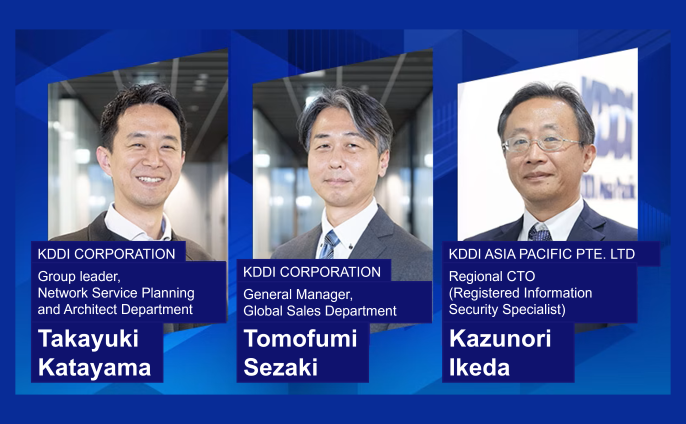
How do you strengthen IT governance at overseas locations? Expanding KDDI networks across the globe to comprehensively support the IT governance in and outside Japan
May 22, 2024
Knowledge
The process of establishing, relocating, and renovating offices overseas

May 16, 2024
Knowledge
Key information security measures when smart office enabling overseas locations

May 09, 2024
Knowledge
Overview of business reviews and other measures for creating a smart office

Apr 25, 2024
Knowledge

What is the best solution for your problem?
Please consult a KDDI consultant.
General Inquiry: 0800-631-3131
Office Hours: 9:00~17:00
(Closed Saturday, Sunday, and UK Bank Holidays)